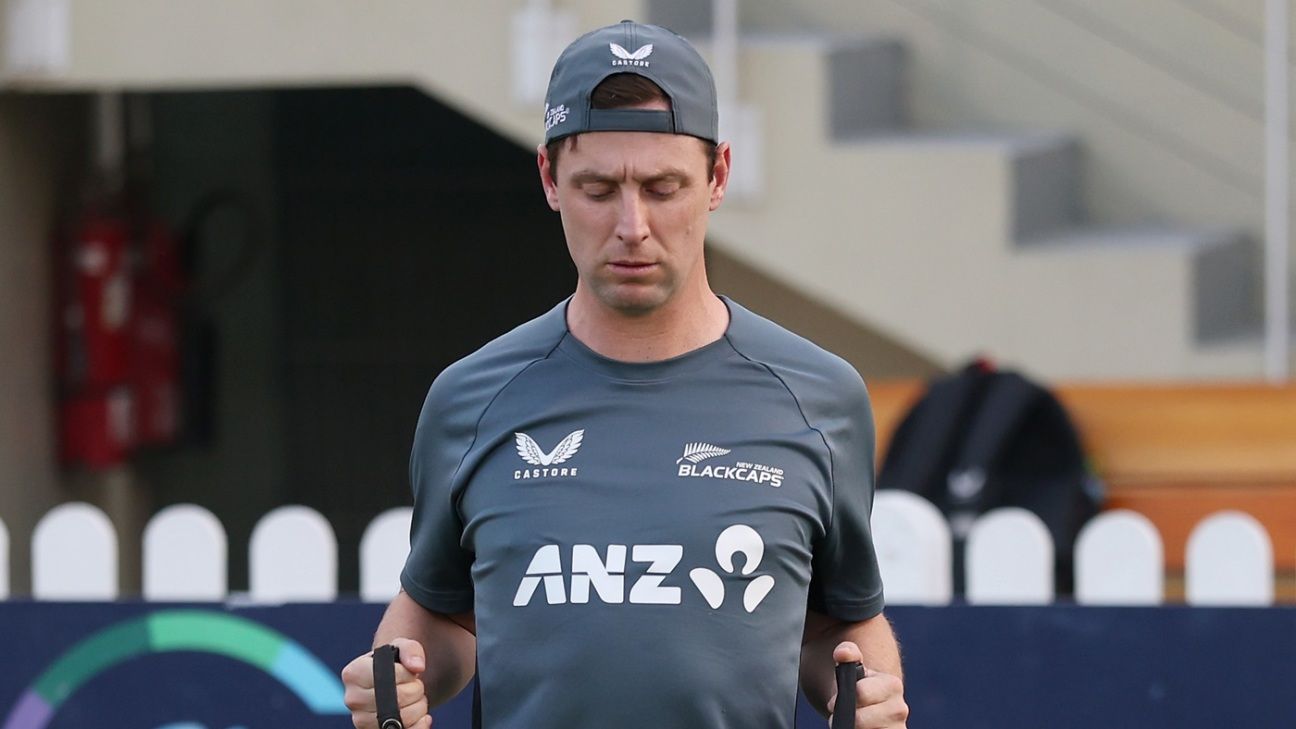
Cricketer Matt Henry Takes Parental Leave from T20 World Cup Amidst Crucial Stage
In a significant and widely discussed development within the world of cricket, New Zealand's prominent fast bowler, Matt Henry, has been granted parental leave and has departed the T20 World Cup squad. This decision sees the key cricketer Henry leave the high-stakes tournament to be with his wife for the birth of their second child. His departure comes at an absolutely critical juncture for the Black Caps, with their semi-final qualification hanging in the balance, creating a dual narrative of personal joy and professional challenge for both Henry and his team.
The news, confirmed by New Zealand Cricket (NZC), highlights a modern approach to professional sports where family milestones are increasingly prioritized. While Henry's absence will undoubtedly be felt on the field, especially given the tournament's knockout implications, the team management and coach Rob Walter have expressed unequivocal support for his decision. The hope remains that Henry could potentially rejoin the squad should the Black Caps advance to the latter stages of the competition, adding another layer of intrigue to New Zealand's T20 World Cup journey.
A Crucial Departure Amidst Tournament Drama
The timing of Matt Henry's departure couldn't be more dramatic. The fast bowler left the team camp immediately after New Zealand's Super Eights clash against England. This match was originally viewed as a make-or-break encounter for the Black Caps, with a victory guaranteeing a direct path to the semi-finals. Unfortunately for New Zealand, they suffered a four-wicket defeat against England, complicating their semi-final aspirations and intensifying the impact of the cricketer Henry leave.
Henry himself contributed a run and picked up a crucial wicket, dismissing Phil Salt, in the game against England in Colombo. His ability to provide early breakthroughs and maintain pressure is a cornerstone of New Zealand's bowling attack. His absence means the Black Caps now face a double challenge: navigating a complex qualification scenario and doing so without one of their premier pacers. The team's fate for progression into the semi-finals now hinges precariously on the outcome of another Super Eights fixture – the match between co-hosts Sri Lanka and Pakistan. The mathematics are precise and unforgiving: for New Zealand to qualify, Pakistan must fail to achieve a significant run-rate boost against Sri Lanka. For instance, if Pakistan were to chase down a target too quickly or win by a massive margin, it would effectively eliminate the Black Caps. This intricate web of results underscores the tense environment surrounding Henry's departure.
Such last-minute changes to a squad can significantly affect team morale and strategy. Coaches often emphasize the importance of continuity, especially in high-pressure tournaments. Henry's skill set, particularly his ability to bowl effectively with the new ball and at the death, will be a considerable void for the Black Caps to fill in any potential semi-final fixture. The team will need others to step up and deliver under immense pressure.
Prioritizing Family: A Modern Sporting Perspective
At the heart of this story is a deeply personal reason: the impending arrival of Matt Henry's second child. This milestone is a testament to the evolving landscape of professional sports, where athletes are increasingly empowered to prioritize significant family events. Gone are the days when a player might be expected to miss such a momentous occasion without question. Head coach Rob Walter's emphatic support for Henry's decision reflects a progressive and empathetic team culture within New Zealand Cricket.
In a statement, Walter conveyed the team's excitement: “Firstly, we’re all very excited for Matt and Holly on the arrival of their second child. It’s a very significant moment for their family and we’re wishing them all the best.” This sentiment goes beyond mere platitudes, signifying a genuine understanding of the importance of family well-being. This modern approach benefits not just the individual player, but often strengthens team cohesion and loyalty in the long run. Players who feel supported in their personal lives are often more engaged and perform better when they return to the field.
The decision for a key cricketer Henry leave the squad, even at such a crucial stage of the T20 World Cup, sends a powerful message across the sporting world. It reinforces the idea that professional athletes are not just performers, but individuals with families and personal responsibilities. This prioritization of family well-being contributes significantly to an athlete's mental health and long-term career satisfaction. Organizations that foster such supportive environments often see positive returns in terms of player loyalty and overall team performance.
The Path to Return: When Could We See Henry Back?
While Matt Henry's departure is confirmed, the door remains open for his potential return to the T20 World Cup. This hinges entirely on the Black Caps' ability to secure a semi-final berth. As coach Rob Walter alluded, “There’s a lot of water to go under the bridge but we’re hopeful that the stars align for the team and for Matt and that we’ll see him back competing in the final phases of the competition.” This statement encapsulates the blend of uncertainty and optimism surrounding the situation.
For Henry to return, New Zealand would first need a favourable outcome from the Sri Lanka vs. Pakistan match. If they qualify for the semi-finals, the logistics of his return would then come into play. This would involve rapid travel arrangements back to the tournament venue, followed by re-integration into the squad potentially with minimal practice time. The physical and mental transition from being present at the birth of his child to immediately re-entering a high-pressure international cricket environment would be demanding.
The dynamic nature of such a scenario highlights the adaptability required from modern athletes and sports organizations. Teams must be prepared for unforeseen circumstances, and players like Henry often possess the resilience to make such transitions. His potential return would be a significant boost for the Black Caps, injecting experience and potency back into their bowling attack for the decisive stages of the competition. The hope of seeing the cricketer Henry leave and then return, adds another layer of drama to what is already a thrilling tournament.
Impact on the Black Caps: Who Steps Up?
The immediate consequence of Matt Henry's absence is a significant gap in New Zealand's bowling line-up. Henry is a seasoned campaigner, known for his ability to swing the ball upfront, generate pace, and deliver crucial variations in the middle overs and at the death. His consistency and experience are hard to replace, especially in the high-stakes environment of a T20 World Cup semi-final.
The Black Caps coaching staff will now need to meticulously assess their remaining squad depth. Potential replacements could include players like Trent Boult, who already leads the attack, or Lockie Ferguson, whose express pace could be vital. If New Zealand has carried an additional specialist seamer in their reserves, this player would likely step into the main XI. The tactical implications are profound: the team might need to rely more heavily on their spin options, or other fast bowlers will have to elevate their game and shoulder more responsibility. This situation often leads to unexpected heroes emerging from within the squad.
From a strategic perspective, the Black Caps might also need to adjust their bowling plans to compensate for Henry's specific skills. For instance, if Henry was earmarked for specific overs, those responsibilities will now be distributed amongst other bowlers, potentially altering their customary roles. This challenge, while unwelcome, also presents an opportunity for the squad to demonstrate its collective strength and resilience, proving that the team is greater than the sum of its individual parts. Such moments can often forge stronger team bonds and lead to memorable performances.
Conclusion
Matt Henry's decision to take parental leave from the T20 World Cup epitomizes the ongoing evolution in professional sports, where personal milestones are increasingly respected and supported. While his temporary departure creates a considerable challenge for the Black Caps as they vie for a semi-final spot, it underscores a humane approach within New Zealand Cricket. The team and fans alike share in the excitement for Henry and his family as they welcome their second child, even as the cricketing world watches keenly to see if New Zealand can navigate the remaining hurdles without him. Should the stars align and the Black Caps qualify for the latter stages, the prospect of the cricketer Henry leave being temporary and seeing him back in action would add a compelling narrative twist to what has already been an eventful tournament. For now, the focus remains on family, with a hopeful eye on a potential return to the global stage.